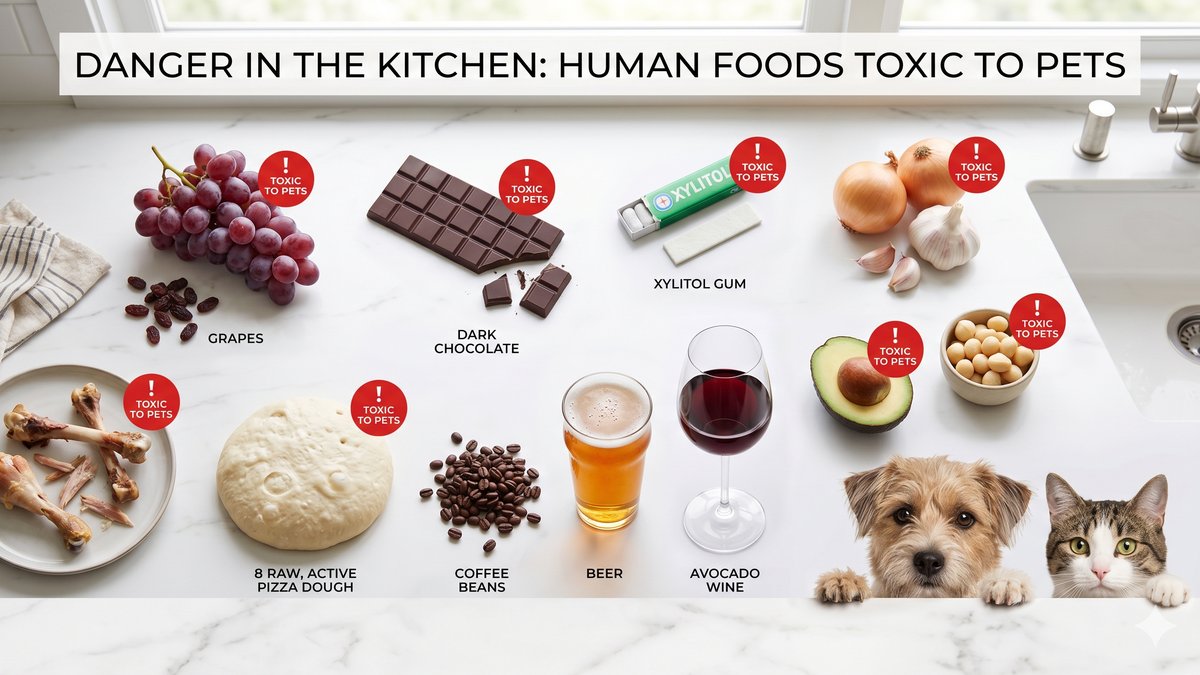
Every pet owner knows not to give chocolate to a dog. But the list of dangerous foods goes far beyond that, and some of the most hazardous ones are things you’d never suspect.
Here are 10 common human foods that can seriously harm your dog or cat.
1. Grapes and Raisins
Even small amounts can cause acute kidney failure in dogs. The toxic compound hasn’t been fully identified, which makes it especially unpredictable. Some dogs react to a single grape, others seem unaffected by more. Don’t risk it.
2. Chocolate
Contains theobromine and caffeine, both toxic to dogs and cats. Dark chocolate and baking chocolate are the most dangerous. Symptoms include vomiting, tremors, seizures, and in severe cases, death.
3. Xylitol
A sweetener found in sugar-free chewing gum, peanut butter, baked goods, and some medications. In dogs, xylitol causes a rapid insulin release leading to hypoglycaemia. It can also cause liver failure. Always check peanut butter labels before giving it as a treat.
4. Onions, Garlic, Leeks, and Chives
All members of the Allium family damage red blood cells in dogs and cats, causing haemolytic anaemia. Garlic is approximately five times more toxic than onions. Cooked forms are just as dangerous as raw.
5. Macadamia Nuts
Unknown toxic mechanism, but even small amounts can cause weakness, hyperthermia, vomiting, and tremors in dogs within 12 hours. Chocolate-covered macadamia nuts are doubly dangerous.
6. Avocado
Contains persin, a fungicidal toxin that causes vomiting and diarrhoea in dogs and is particularly dangerous for birds and rabbits. The stone is also a choking hazard.
7. Alcohol
Dogs and cats cannot metabolise alcohol. Even small amounts can cause dangerously low blood sugar, low body temperature, and respiratory failure. This includes alcoholic drinks, raw dough (which ferments), and some mouthwashes.
8. Caffeine
Coffee, tea, energy drinks, some medications. Caffeine overstimulates the nervous system, causing rapid heart rate, seizures, and collapse. There is no antidote.
9. Raw Yeast Dough
Uncooked dough expands in the warm, moist environment of your pet’s stomach. This causes bloating and, as the yeast ferments, produces alcohol, leading to ethanol poisoning on top of the physical distension.
10. Cooked Bones
While raw bones are generally safer, cooked bones splinter easily and can cause internal lacerations, obstruction, or choking. Poultry bones are particularly dangerous when cooked.
The Problem with Pet Food Labels
Pet food labels face the same problem as human food labels: they’re long, dense, and use ingredient names that don’t mean much to the average owner. Is “meat and animal derivatives” safe for a dog with a chicken sensitivity? Does this treat contain any of the above?
SafeIntake Pets is coming soon: the same scanning technology that helps people with food allergies, applied to your pet’s food and treats. Scan a barcode. Know instantly.
If your pet has eaten something toxic, contact your vet or an emergency animal poison line immediately. Don’t wait for symptoms.