Caramel coloring is a brown color additive used to give foods and beverages a dark amber or brown appearance. It is one of the most widely used colorings in the food industry, found in everything from soft drinks to soy sauce. Yet most people walk right past it on ingredient labels without a second thought.
If you read labels carefully, you have probably seen the words “caramel color” listed somewhere on a package. But what does that actually mean? Is it the same as the caramel you drizzle on ice cream? And how do you know which products contain it?
Here is a plain-language breakdown of caramel coloring in food, how it differs from real caramel, and how to spot it the next time you shop.
Real Caramel vs. Caramel Coloring
These two things share a name, but they are not the same.
- Real caramel is made by heating sugar until it melts and browns. It adds flavor and color. Think caramel candies or caramel sauce.
- Caramel coloring is an industrial additive made by heating sugars (like dextrose or high fructose corn syrup) with acids, alkalis, or salts under controlled conditions. Its purpose is only to add color, not flavor.
The distinction matters. Caramel coloring is a processed ingredient designed for consistency and shelf stability. It does not taste like caramel.
The Four Classes of Caramel Color
Not all caramel coloring is the same. There are four classes, each made with a different process and carrying a different European E-number designation under E150.
| Class | E-Number | How It Is Made | Common Uses |
|---|---|---|---|
| Class I (Plain) | E150a | Sugar heated with no reactants | Spirits, some desserts |
| Class II (Caustic sulfite) | E150b | Sugar heated with sulfite compounds | Cognac, sherry, some vinegars |
| Class III (Ammonia) | E150c | Sugar heated with ammonia compounds | Beer, soy sauce, gravies |
| Class IV (Sulfite ammonia) | E150d | Sugar heated with both sulfite and ammonia compounds | Soft drinks (colas), baked goods |
Class III and Class IV are the most commonly used in mass-produced foods and beverages. They are also the most studied, because their manufacturing process can produce a byproduct called 4-methylimidazole (4-MEI).
Where Caramel Coloring in Food Shows Up Most
Caramel coloring appears in a wide range of packaged products. Some are obvious. Others might surprise you.
- Soft drinks: Dark colas are the biggest source of caramel coloring for most people
- Beer and malt beverages: Often used to deepen color
- Soy sauce and teriyaki sauce: Adds the characteristic dark brown
- Gravies and broths: Creates a richer visual appearance
- Baked goods: Breads, cookies, and cereals sometimes contain it
- Processed meats: Some deli meats and sausages use it
- Pet food is out of scope here, but sauces, dressings, and even some flavored coffees round out the list
If a product looks darker brown than you would expect from its base ingredients alone, caramel coloring is a likely reason.
How to Spot Caramel Coloring on a Label
This is where things get tricky. U.S. food labels typically list it as one of these terms:
- “Caramel color”
- “Caramel coloring”
- “Color added (caramel)”
In the EU, you will see the E-number: E150a, E150b, E150c, or E150d.
Here is what labels do not tell you: in the United States, manufacturers are not required to specify which class (I, II, III, or IV) of caramel color they use. You will just see “caramel color” with no further detail. That means you cannot tell from the label alone whether a product uses the plain Class I variety or the ammonia-processed Class IV.
A Quick In-Store Label Check
Follow these steps the next time you pick up a packaged food:
- Flip the product over and find the ingredient list
- Scan for the words “caramel color” or “caramel coloring,” usually toward the middle or end of the list
- Note the product type: dark colas, soy sauces, and gravies are more likely to use Class III or IV
- If the product has a European label, look for the specific E-number (E150a through E150d) for more detail
- Compare similar products: some brands skip caramel coloring entirely, so alternatives may exist
You read labels. You still feel unsure sometimes. That step of scanning for “caramel color” takes two seconds and puts you in control.
What the Science Says About Safety
Major food safety authorities have reviewed caramel coloring extensively.
FDA allows caramel color in food at levels consistent with good manufacturing practice. The agency has stated it has no reason to believe there are immediate or short-term health risks from 4-MEI at levels found in food, though it continues to review the data.
EFSA concluded that caramel colors are neither genotoxic nor carcinogenic and set a group acceptable daily intake (ADI) of 300 mg per kilogram of body weight per day. For Class III (E150c) specifically, EFSA set a lower ADI of 100 mg/kg body weight/day due to immunotoxicity signals observed in animal studies.
California Proposition 65 flags products containing more than 29 micrograms of 4-MEI per day, which is tied to a cancer warning framework based on high-dose animal testing.
The consensus: caramel coloring at typical dietary levels is considered safe by regulators. The ongoing conversation is really about how much 4-MEI certain products contain and which class of caramel color was used, not the coloring itself.
Frequently Asked Questions
Is caramel coloring the same as caramel candy?
No. Caramel coloring is an industrial additive made by heating sugars with acids, alkalis, or salts to create a consistent brown color. It does not taste like caramel and serves a purely visual purpose. Real caramel is made simply by heating sugar until it browns.
Does caramel coloring contain any common allergens?
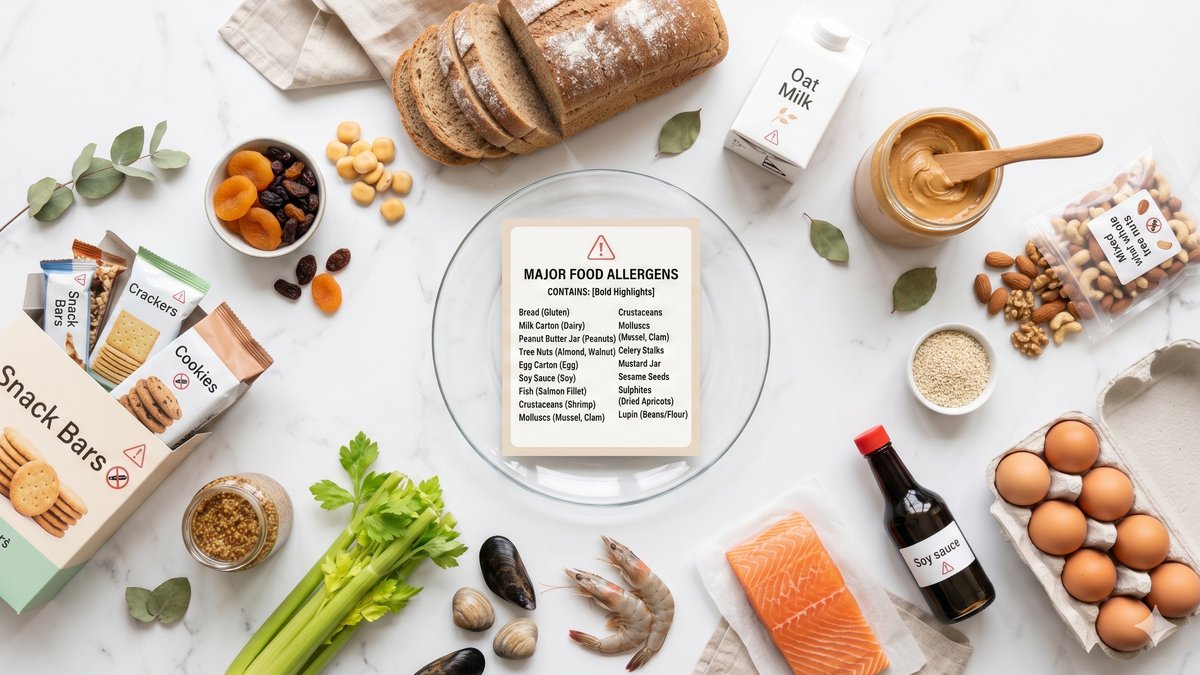
Caramel coloring is not classified as a major allergen. However, some formulations may be processed with ingredients derived from corn or wheat. If you manage a specific allergy, check with the manufacturer or use a scanning tool that flags allergens in your profile.
Can I tell which class of caramel color is in a product?
In the EU, labels must specify the E-number (E150a through E150d), which tells you the exact class. In the U.S., labels only say “caramel color” with no class distinction, so you generally cannot tell from the label alone.
How can I reduce my exposure to 4-MEI?
The simplest approach is to limit dark colas, certain soy sauces, and heavily browned processed foods that are most likely to contain Class III or IV caramel color. Choosing lighter-colored alternatives or products that skip caramel coloring entirely also helps.
Read Labels Faster with a Scanner
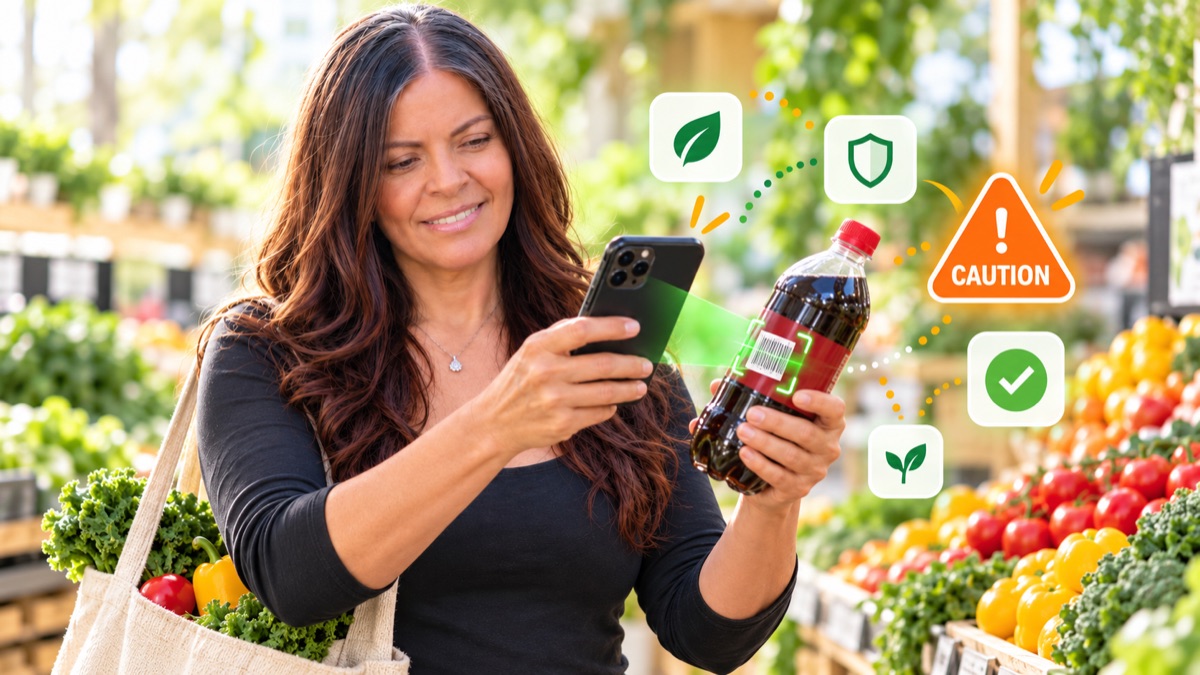
Spotting caramel coloring is just one piece of the label-reading puzzle. If you want a faster way to check ingredients across allergens, additives, and more, SafeIntake lets you scan a barcode and get a personalized verdict in seconds. Download the app to start scanning.