Food labels are getting longer. Ingredient lists are getting harder to parse. And for the 32 million people in the EU living with food allergies, that complexity isn’t just inconvenient, it’s dangerous.
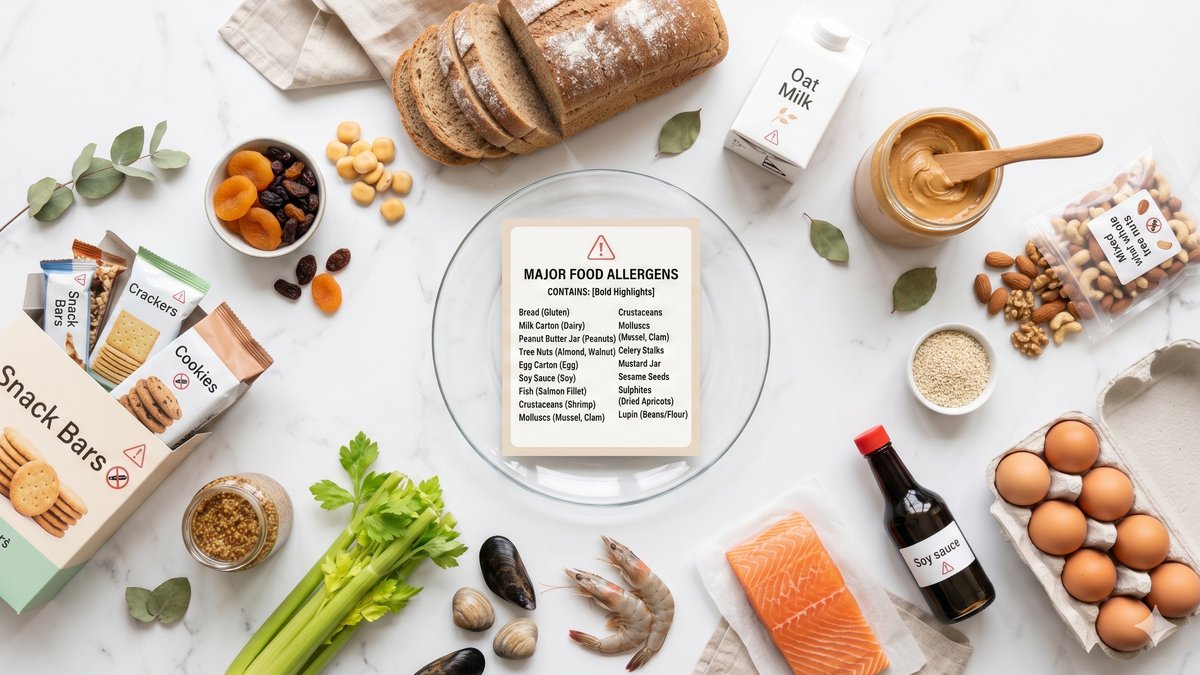
The EU requires manufacturers to declare 14 major allergens clearly on every product. SafeIntake detects 13 of them. Here’s what they are, where they hide, and what to look for.
The 13 Allergens SafeIntake Detects
1. Gluten
Found in wheat, barley, rye, spelt, kamut, and malt. Coeliac disease affects roughly 1 in 100 people in Europe and many go undiagnosed for years. Gluten hides in unexpected places: soy sauce, stock cubes, chips, and even some medications.
2. Dairy (Milk)
Includes all milk proteins: casein, whey, and lactose. Dairy is one of the most common hidden allergens because it appears under dozens of ingredient names: lactalbumin, ghee, butter oil, and hydrolysed caseinate.
3. Soy
Found in tofu, edamame, miso, and most processed foods. Soy is added to breads, cereals, and meat products as a protein filler. It can also hide as “vegetable protein” or “textured vegetable protein (TVP).“
4. Peanuts
A legume, not a nut but one of the most severe allergens. Even trace contact can trigger anaphylaxis in sensitive individuals. Peanut oil in some forms may still trigger reactions.
5. Tree Nuts
Almonds, cashews, walnuts, pecans, pistachios, Brazil nuts, hazelnuts, macadamia: all classified separately but grouped under tree nuts. Nut pastes and flavourings are common hiding places.
6. Eggs
Found in pasta, baked goods, sauces, and many “natural flavourings.” Egg white (albumin) is used as a clarifying agent in some wines and fruit juices.
7. Fish
Includes all finned fish. Fish extract and fish sauce appear in Worcester sauce, some salad dressings, and Caesar dressing. Anchovies in particular show up where you’d least expect them.
8. Shellfish
Shrimp, crab, lobster, and crayfish. Often used in seafood stocks, sauces, and Asian cuisine. Cross-contamination in seafood restaurants is common and serious.
9. Lupin
A legume whose flour turns up in some baked goods, pasta, and gluten-free products. People with a peanut allergy are more likely to react to it, and it is often overlooked on labels.
10. Sesame
Now one of the fastest-growing allergen concerns globally. Found in tahini, hummus, breads, and Asian sauces. The US added sesame as a major allergen in 2023.
11. Mustard
Common in French and German cuisine, condiments, salad dressings, marinades, and spice blends. Mustard powder is also used in savoury snacks.
12. Celery
Including celeriac. Found in soups, stocks, spice mixes, and some crisps. The allergen can survive cooking and is not always visibly present.
13. Sulphur Dioxide and Sulphites
Used as a preservative in dried fruit, wine, beer, and some packaged foods. At high levels they can cause asthma attacks and reactions in sensitive individuals.
Why Labels Aren’t Enough
Regulations require bold declaration but manufacturers list allergens inconsistently. Some use trade names. Some bury cross-contamination warnings in tiny print. Some ingredient lists have changed since the product was last updated on the database.
That’s exactly the problem SafeIntake was built to solve: three layers of allergen detection: structured tags, trace warnings, and deep ingredient-text parsing so you get a clear SAFE, CAUTION, or UNSAFE verdict, tailored to your personal profile.
Always check the physical label. Data can be outdated. When in doubt, contact the manufacturer directly.