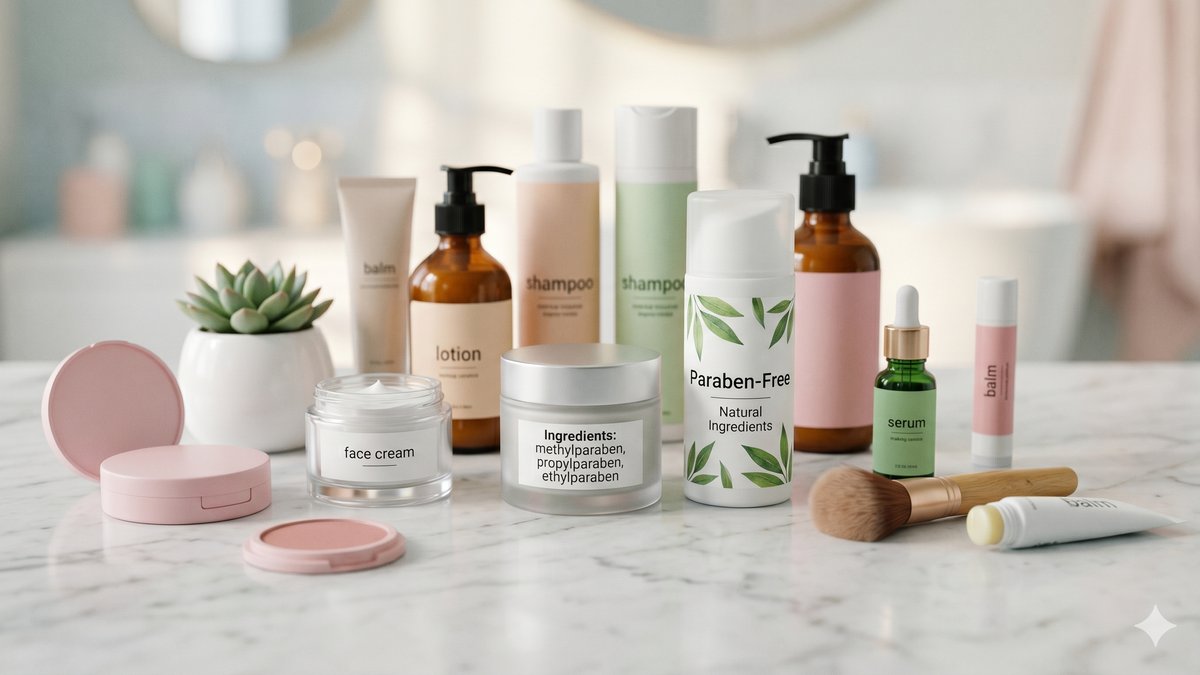
Walk down any pharmacy aisle and you’ll see “paraben-free” on everything from shampoo to sunscreen. But why? What are parabens, why are they used, and should you actually be avoiding them?
Here’s a clear-headed look at the evidence.
What Are Parabens?
Parabens are a family of synthetic preservatives used to prevent the growth of bacteria, mould, and yeast in cosmetics and personal care products. They’ve been used since the 1950s and remain among the most effective and inexpensive preservatives available.
The most common ones you’ll see on labels:
- Methylparaben (E218 in food)
- Ethylparaben
- Propylparaben
- Butylparaben
- Isobutylparaben
Why Are They Controversial?
In 1998, a study found that parabens could bind to oestrogen receptors in the body, meaning they behave similarly to oestrogen, a key hormone. This classifies them as endocrine disruptors compounds that can interfere with hormonal signalling.
A 2004 study detected parabens in breast tumour tissue. The study did not prove parabens caused cancer, but it sparked a wave of concern that hasn’t fully subsided.
What Do Regulators Say?
The EU Cosmetics Regulation bans isobutylparaben and isopropylparaben entirely. It restricts butylparaben and propylparaben to 0.14% in leave-on products and prohibits them in products intended for the nappy area of children under three.
Methylparaben and ethylparaben are still permitted at up to 0.4% individually or 0.8% combined.
The European Food Safety Authority (EFSA) and Scientific Committee on Consumer Safety (SCCS) consider permitted parabens safe at current regulatory levels but note that cumulative exposure across multiple products hasn’t been fully assessed.
The Real Issue: Cumulative Exposure
The debate isn’t really about a single product. It’s about the fact that parabens appear across the full range of what most people use daily: moisturiser, shampoo, conditioner, body lotion, makeup, deodorant.
Each product individually may fall within safe limits. Whether combined daily exposure over years matters especially for vulnerable groups like pregnant women, infants, and people with hormone-sensitive conditions remains an active area of research.
What to Look for on Labels
Parabens must be listed by their full INCI name in the EU. Look for any ingredient ending in -paraben. If you want to avoid them:
- Check every leave-on product (moisturisers, serums, body lotions)
- Check products applied near the face and underarm area
- Use SafeIntake Beauty to scan barcodes and flag paraben-containing products instantly
The “paraben-free” movement has led many brands to replace parabens with alternatives some of which have their own emerging concerns (phenoxyethanol, MIT/CMIT). The science of cosmetic preservation is more complex than any single ingredient label.
SafeIntake Beauty is coming soon to help you make informed choices based on the full ingredient picture, not just marketing claims.
This article is informational only. Consult a dermatologist or healthcare professional if you have concerns about specific ingredients and your health.