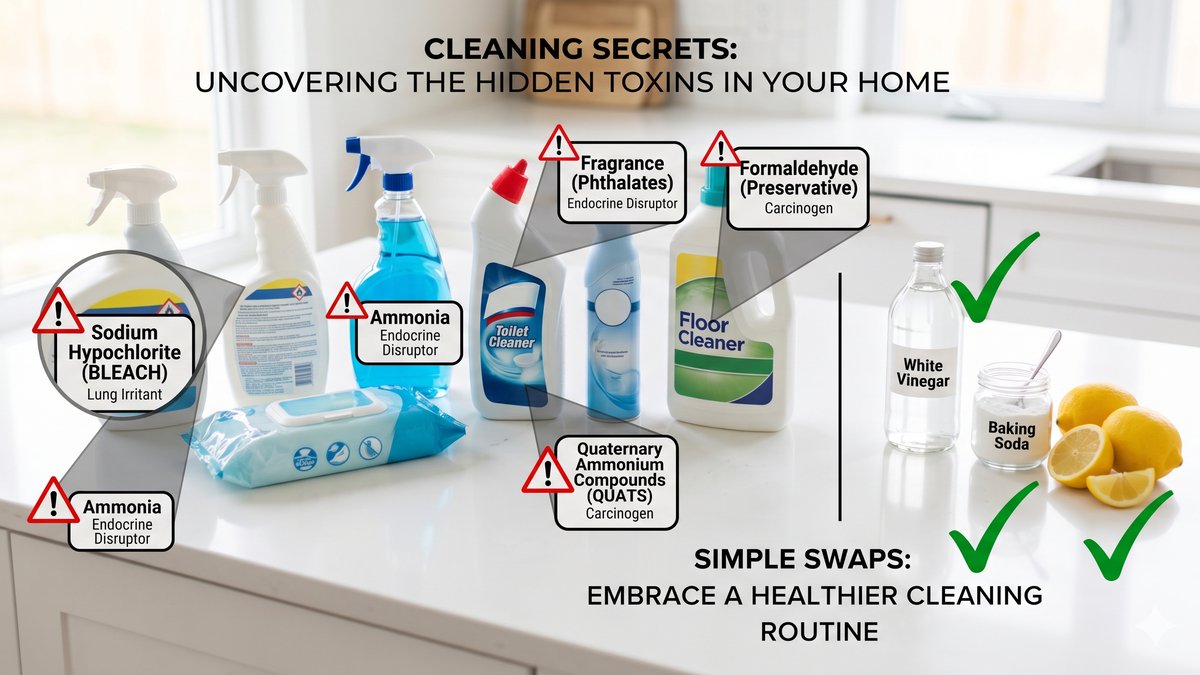
A clean home is supposed to be a safe home. But many mainstream cleaning products contain ingredients that are linked to respiratory irritation, hormone disruption, and long-term health concerns, and they’re not always obvious from the label.
Here are five chemicals worth knowing about.
1. Sodium Hypochlorite (Bleach)
Found in: disinfectant sprays, toilet cleaners, mould removers, whitening products.
Bleach is effective at killing bacteria and viruses but it reacts with other common household chemicals to produce toxic gases. Mixing bleach with ammonia produces chloramine gas. Mixing it with vinegar produces chlorine gas. Both can cause serious respiratory damage.
It’s also corrosive to skin and eyes, and prolonged exposure can irritate the airways, particularly in children and people with asthma.
2. Ammonia
Found in: glass cleaners, floor polishes, multi-surface sprays, oven cleaners.
Ammonia vaporises quickly, making inhalation easy even during brief cleaning. Regular exposure can cause chronic bronchitis and occupational asthma. It’s also highly irritating to the eyes, nose, and throat.
Products containing ammonia often smell “clean” which is partly why the association is so hard to break.
3. Phthalates
Found in: air fresheners, scented cleaning products, “fragrance” in any product.
Phthalates are plasticisers used to carry and fix synthetic fragrances. They’re endocrine disruptors, meaning they interfere with hormone signalling in the body. Studies have linked high phthalate exposure to reproductive issues, thyroid disruption, and developmental effects in children.
They’re rarely listed by name. Instead, look for “fragrance,” “parfum,” or “scent” these are umbrella terms that can mask dozens of individual compounds.
4. Formaldehyde and Formaldehyde-Releasing Preservatives
Found in: antibacterial soaps, disinfectants, some fabric softeners and floor cleaners.
Formaldehyde is a known human carcinogen (IARC Group 1). It’s not always added directly. Instead, certain preservatives like DMDM hydantoin, imidazolidinyl urea, and quaternium-15 release formaldehyde slowly over time as they break down.
The EU restricts formaldehyde in cosmetics and some products, but cleaning products face less stringent rules.
5. Quaternary Ammonium Compounds (Quats)
Found in: disinfectant wipes, fabric softeners, antibacterial sprays, floor cleaners.
Quats are effective disinfectants but have been linked to occupational asthma, skin sensitisation, and in some studies reproductive toxicity. They’re also associated with the development of antibiotic-resistant bacteria when used at low concentrations over time.
Common names: benzalkonium chloride, alkyl dimethyl ammonium chloride, cetrimonium chloride.
Reading the Label Isn’t Enough
Ingredient disclosure on cleaning products is far less regulated than on food. Many manufacturers list only active disinfecting agents and omit the rest under “inert ingredients” or “other components.”
SafeIntake House is coming soon: the same barcode-scanning safety engine, applied to the products in your cupboards. Scan a product. Know what’s really in it.
Ventilate when cleaning. Never mix products. Read warnings. And if you have young children or asthma in the household, ingredient awareness matters more, not less.